






Piglet Feeding Trough with Wire Grid
Description: Piglet feeding trough with wire grid to reduce waste - Hebei Yilu Shunfeng professional manufacturer....
Whatsapp:+86 15713272229
Product Description:
Product Overview
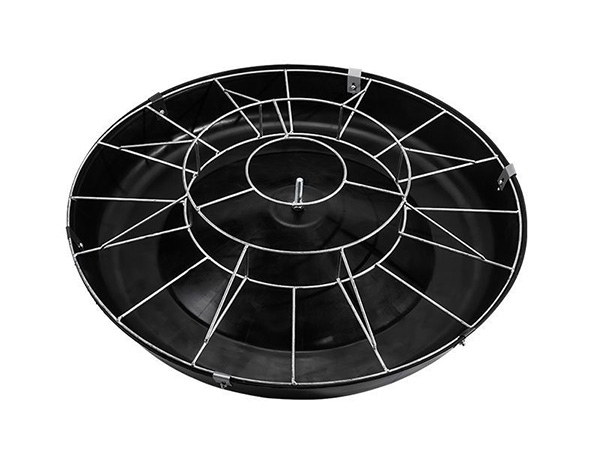
The Piglet Feeding Trough with Wire Grid is a round feeding pan protected by a wire grid that stops piglets from stepping into the feed. The trough has a black plastic pan and a silver metal grid fitted around the rim, with the grid divided into sections so that piglets can put their heads through to eat while their feet stay out of the pan. This simple protection greatly reduces feed waste, because the feed is not trampled or soiled by the animals, and it keeps the feed cleaner for longer. The trough is designed for the nursery and weaner stages, where piglets are active and may otherwise climb into the feed. The black plastic pan is tough, lightweight and easy to clean, and the metal grid is firmly fixed so that it cannot be displaced by the animals. The round shape and the open sections of the grid allow several piglets to feed at the same time, so the whole litter can eat together. With its practical combination of a protected pan and a stable grid, this trough helps the farm save feed and keep the nursery clean during the busy weaning period, when a little extra care in feeding pays off in better growth and fewer health problems.
Technical Specifications
The trough is made from food-grade plastic for the pan and galvanised or stainless steel wire for the grid. The pan has a diameter of about 330 mm and a depth of 90 mm, and the grid rises about 120 mm above the pan. The grid is divided into 8 sections, each about 80 mm wide, which is enough for a piglet head to pass through while the body stays outside. The grid is fixed to the pan with clips or welded brackets around the rim. The complete unit weighs approximately 2.5 kg. The pan holds about 3 litres of feed, and the flat base gives a stable footing on solid or slatted floors. The grid wire is 4 mm in diameter and is bent with rounded ends for safety. Optional models include a larger pan of 380 mm and a version with a finer grid for very young piglets. The unit is supplied assembled and ready to place in the pen, and spare clips are available if a grid needs to be refitted after long service.
Manufacturing & Quality
The trough is produced in two stages: the plastic pan is injection moulded from food-grade material, and the wire grid is formed and welded on a dedicated jig. The moulding is controlled to give a smooth, strong pan with a uniform wall thickness, and the grid is welded with firm joints and rounded ends. The two parts are then assembled, with the grid checked for the correct height and spacing. Each trough is inspected for surface defects, dimensions, the strength of the grid joints and the fit between the pan and the grid. A sample from each batch is tested for impact resistance and the stability of the assembled unit. Because the pan is moulded in one piece and the grid is welded with care, the trough is consistent from unit to unit and will withstand the rough use of a nursery pen. The materials are selected for easy cleaning and long life, and the plastic will not rust, crack or be chewed by the animals, so the trough keeps working reliably through many batches.
Applications
This trough is used in farrowing pens, nurseries and weaner group pens, where it is placed on the floor or in the creep area. The wire grid stops the piglets from stepping into the feed, which keeps the feed clean and reduces waste, and the open sections let several piglets eat at the same time. The trough is especially useful in pens with young, active piglets that may otherwise climb into the pan. It works with dry creep feed, crumble and starter pellets, and it can be combined with nipple drinkers in the same pen. Because the pan is plastic and light, the trough is easy to move and wash, and it will not rust in the humid conditions of the nursery. With its protected feeding surface and stable construction, the trough supports clean, economical feeding through the critical early weeks, and it is a practical tool that nursery staff appreciate for its low maintenance and long service.

 Mobile client