





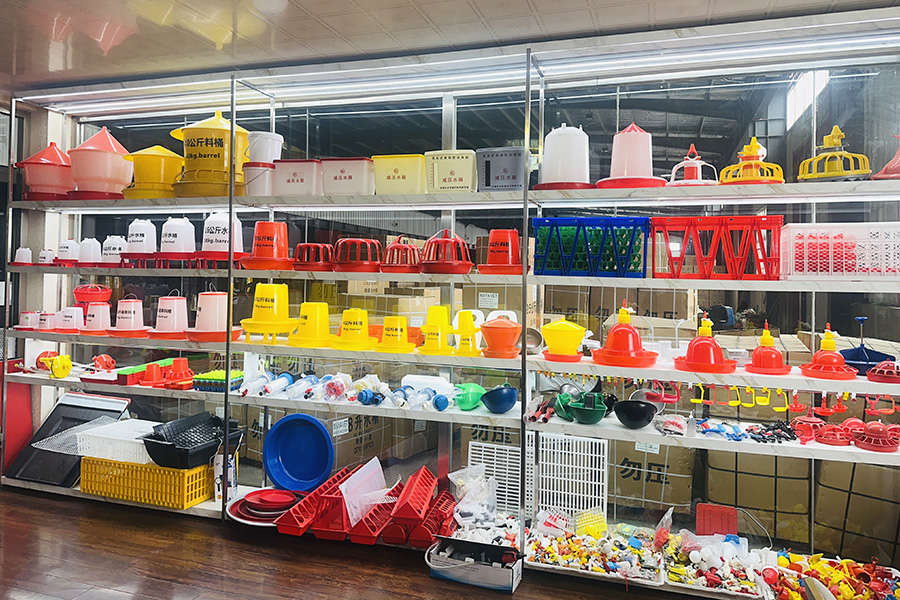

Long Feeding Trough vs Round Feeder: Which One Is Right for Your Farm
Publish Time:2026-10-20 10:48:07 Author:Yilu Shunfeng Views:177
Two Common Feeding Solutions
Long feeding troughs and round feeders are the two most common feeding solutions in poultry farming. Both keep feed dry and accessible, but they work differently in different house layouts. Understanding the differences helps farm owners choose the right equipment for their flock size, bird species and feeding routine.
Long Feeding Troughs
Long feeding troughs are straight, open channels usually installed along cage rows or on the floor. They allow many birds to feed at the same time along a single line, which makes them efficient for large flocks. Troughs can be filled manually or with an automatic feed line, and their length can be matched to the house layout.
Advantages of Long Troughs
Many birds can feed simultaneously, reducing crowding.
Simple to fill and easy to watch feed levels along the line.
Works well with automatic feed delivery systems.
Available in several lengths, such as 23 cm, 50.5 cm, 75 cm, 85 cm and 120 cm models.
Points to Consider
Troughs need enough space along the house, and leftover feed can sit in the open where it may collect dust. Regular cleaning and correct filling depth help keep feed fresh.
Round Feeders
Round feeders have a central hopper and a pan around the base, and they can be placed anywhere in the house. The hopper stores a larger amount of feed, so round feeders need less frequent refilling. They are easy to move and suit free-range and floor-rearing systems.
Advantages of Round Feeders
Feed is stored in the hopper and released as birds eat, so refilling is less frequent.
Portable and easy to reposition in the house or outside.
Available in capacities from 1.5 kg to 40 kg.
One-piece models are easy to clean and have no loose parts.
Points to Consider
Round feeders take up floor space, and each unit serves a limited number of birds. Several feeders may be needed in large houses, and the pan should be checked to avoid feed build-up.
How to Choose
For cage houses and long houses where birds are kept in rows, long feeding troughs are often the better choice because they follow the house layout and serve many birds per meter. For floor-rearing, brooder houses and small to medium flocks, round feeders offer more flexibility and easier feed storage. Some farms combine both: troughs for the main feeding line and round feeders for backup or starter groups.
Feeding Tips for Both Types
Keep feed depth moderate so birds cannot waste feed by scratching it out. Check the feed level daily and clean the equipment regularly. Adjust feeder height as the birds grow, and make sure every bird has enough feeding space to avoid competition and uneven intake.
Frequently Asked Questions
Q1: Which feeder wastes less feed?
Both can be efficient when used correctly. The pan and hopper design of round feeders reduces spillage, while shallow filling in long troughs prevents scratching waste.
Q2: Can long troughs be used for chicks?
Yes, with low depth and small-size troughs, but many farmers use chick trays and plates for the first days and switch to troughs or round feeders later.
Q3: How much feeding space does one bird need?
As a general guide, allow about 2 to 5 cm of trough edge per adult bird, depending on species and house system.
About Hebei Yilu Shunfeng Breeding Equipment
Hebei Yilu Shunfeng Breeding Equipment Co., Ltd. offers long feeding troughs, round feeders, one-piece feeders and chick feeding trays in a range of sizes. All products are quality checked and export packed. Contact us for feeding system design advice.
References
FAO. Poultry Feeding and Nutrition. Food and Agriculture Organization of the United Nations.
Bell, D. D., & Weaver, W. D. (2002). Commercial Chicken Meat and Egg Production (5th ed.).
ISO 9001:2015. Quality Management Systems - Requirements. International Organization for Standardization.
Related News
-
FAQ: Export Orders, Packaging and Shipping for Poultry Equipment
Common questions about buying poultry equipment for export, covering MOQ, packaging, carton details, delivery time and mi...
-
FAQ: Poultry Equipment Cleaning and Maintenance
Answers about cleaning and maintaining poultry feeders, drinkers and other farm equipment, including cleaning frequency, ...
-
FAQ: Nipple Drinkers vs Bell Drinkers - Which Watering System Is Better
Compare nipple drinker systems and bell drinkers for poultry farms, covering hygiene, water intake, cost and suitability ...
-
FAQ: How to Prevent Feed Waste in Poultry Farming
Practical answers on how to reduce feed waste in poultry farming, covering feeder selection, filling depth, feeder height...
-
Poultry Drinker FAQ: Common Questions About Watering Equipment
Common questions about poultry drinkers answered, covering bell drinkers, nipple drinkers, water cups and drinker mainten...


 Mobile client